



AI & automation
AI where there's a workflow to plug it into.
We don't sell models. We look at work you already do — research, publishing, data evaluation — and put automation where it removes a real step.
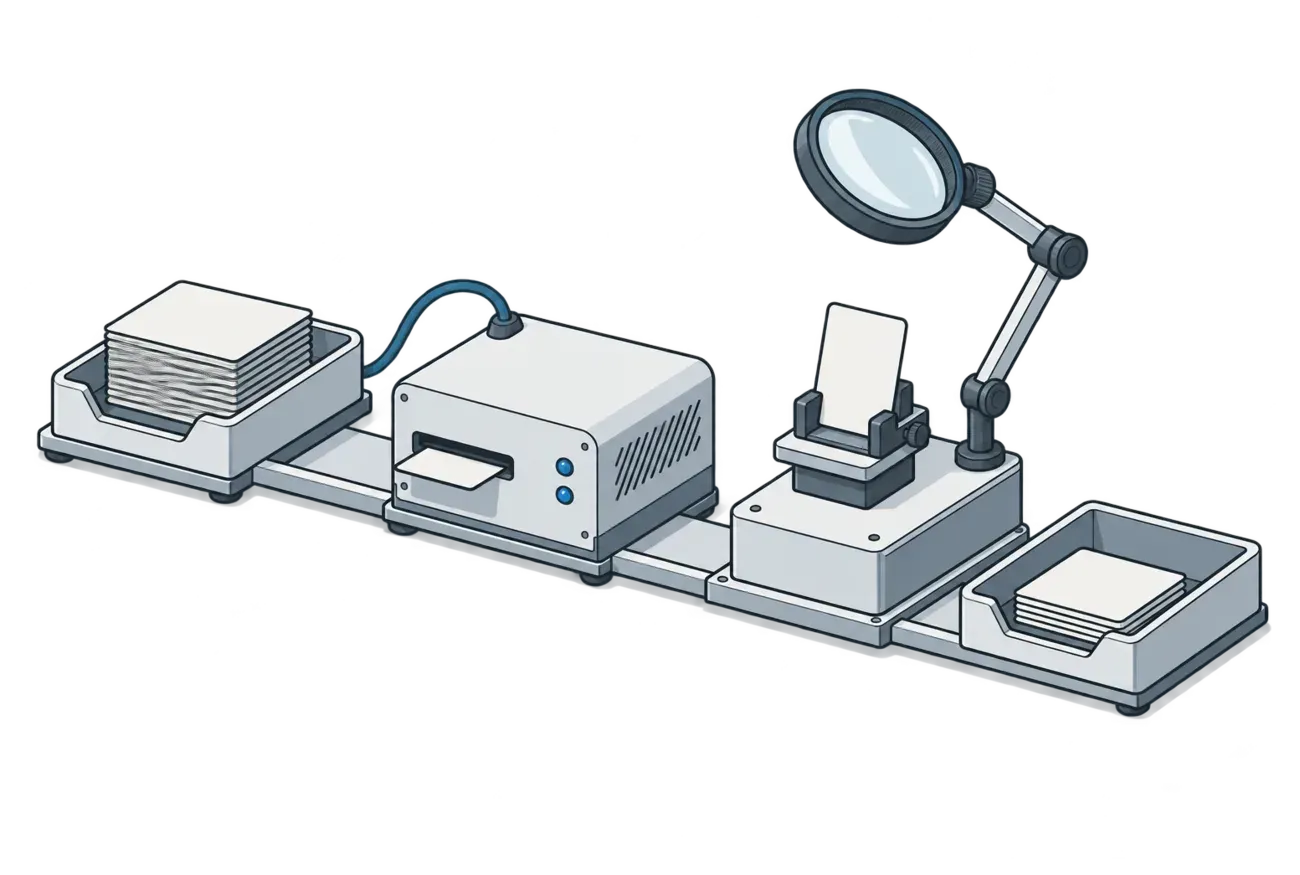
What it's good at, and what it isn't
Models can be useful inside bounded tasks such as drafting, extraction, classification, summarising and code generation. The output still needs a verification method appropriate to the consequence of being wrong.
So we build a review step into the workflow: something a person reviews, a source the answer must cite, or a rule that fails loudly. Work that cannot tolerate an occasional model error needs a different design and may not be suitable for this kind of automation.
Four kinds of work
Where we have actually done this.
Science and research
Literature triage, structured extraction from papers and PDFs, dataset annotation, and pipelines you can run again and get the same answer.
Web and CMS
Drafting with review gates, translation, metadata and alt text at scale, internal search, and editorial assistants that work inside the CMS you already use.
Data evaluation and analysis
Normalising messy input, classification, reconciling sources that disagree, and drafting the report a person then signs.
Workflow plumbing
Assistants wired to your own tools, scheduled jobs, API integrations, and self-hosting where the data can't leave the building.
Your data, your rules
Model quality is only one risk. The design also has to account for where data is processed, who can access it, how long records are kept and which contractual terms apply.
Those decisions are written down before implementation.
Provider and tier named
The selected model, service tier and relevant data terms are recorded for the project.
Self-hosting assessed
Where data must remain inside your infrastructure, we assess an open-weights deployment alongside its hardware and operating cost.
Retention is deliberate
Prompts, inputs and outputs are retained only where needed, with access, redaction and deletion rules agreed in advance.
How an engagement is shaped
- 01
Workflow audit
A fixed fee. We watch how the work is actually done, then write down where automation would remove a step and where it would only add one.
- 02
Prototype in two weeks
One workflow, end to end, on your real data. Enough to know whether it's worth building properly.
- 03
Build and hand over
Documented, self-hostable, yours. We'd rather you didn't need us afterwards.
- 04
Retainer for the watching
Only for the parts that genuinely need watching — model changes, cost drift, quality regressions. Cancellable.
The questions that matter
Which models do you use?
The model is selected against the task, data constraints, required context, latency and operating cost. The provider and service tier are named in the project documentation.
Is our data used for training?
Provider terms and account controls change, so the applicable terms are checked for the selected service and recorded before data is sent. If external processing is not acceptable, we assess a self-hosted design.
Can it run on-premises?
Yes, where an appropriate open-weights model can meet the task. Hardware, throughput, maintenance and evaluation requirements are part of that decision; self-hosting is not automatically cheaper.
How do you stop it inventing things?
No design eliminates model error. We constrain and detect it with validated structured output, retrieval against approved sources, citations and a human review step where the consequence warrants one.
What does it cost to run per month?
The prototype records usage against representative data. That gives the project an operating estimate and a ceiling that can be monitored after launch.
Can you just make our chatbot better?
Sometimes. First we check whether a conversational interface matches the task; search, a form or a background workflow may be simpler and easier to verify.
Start with the audit.
The fixed-fee review identifies the steps worth testing and the verification each one would need before anything is built.